
MARCH 2026 · Journal
The Power of Packaging Design in Consumer Choice
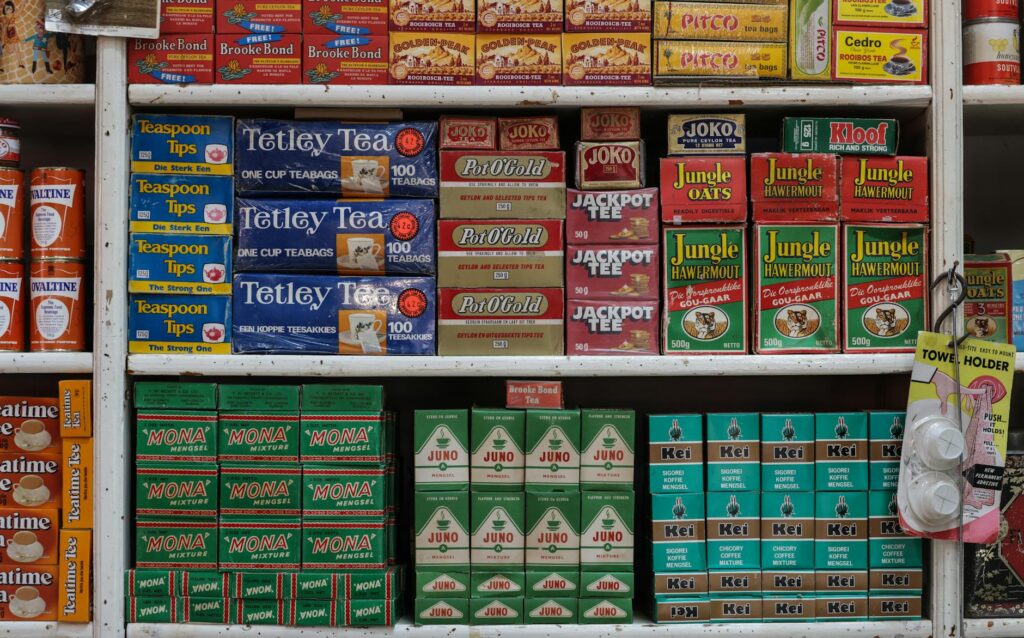
The Shelf as a Battlefield
Walk through the FMCG aisle at Carrefour in Two Rivers, or the home care section at Naivas Westgate, or any of the Quickmart branches that have expanded rapidly across Nairobi in recent years, and pay attention to what you actually see. Not what you are looking for. What you see. The products that break through are not necessarily the best products. They are the products whose packaging is doing its job: interrupting attention, communicating value instantly, and giving the shopper a reason to reach out and pick them up.
Industry research across FMCG categories consistently shows that around 70 percent of purchasing decisions in this sector are made at the point of sale. The consumer walked in with a category in mind. Cooking oil, juice, hand soap. But not necessarily a brand decision made. The packaging is making the closing argument. Everything else. The advertising, the social media presence, the word of mouth. Was the warm-up. The packaging is the conversion moment.
For Kenyan manufacturers and consumer goods brands, this is both a challenge and an opportunity. The challenge is that shelf space in major retail chains is genuinely competitive, and the visual noise is significant. The opportunity is that the standard of packaging design among local producers is uneven. Which means that a well-designed product stands out against the field in a way that it might not in a more design-mature market.
What Kenyan Shoppers Look For
Effective packaging design starts with understanding the specific person picking up the product. In the Kenyan retail context, we think about several factors that are particular to this market.
Value signalling is critical. Kenyan consumers are sophisticated about price-to-quality assessment. A premium-looking package on a product priced in the budget tier creates cognitive dissonance. The shopper suspects a trick. Conversely, a product priced at a premium that looks cheap on the shelf loses sales it should be winning. The visual presentation needs to be calibrated to the price point and to the aspirational position of the brand within that tier.
The sachet economy shapes expectations in a way that is important for any FMCG brand operating in Kenya to understand. A significant proportion of Kenyan consumers buy single-serve or small-volume portions as a matter of household cash flow management, not preference. If your packaging strategy does not include a sachet or single-serve format, you are effectively absent from a large portion of the market. And the design challenge for sachets is distinct. All the communication that appears on a 500ml bottle needs to work on a 10g foil sachet. That requires design thinking from the start, not retrofitting.
Legibility is non-negotiable. On a crowded shelf, in mixed lighting, often being read by someone who may not be reading their first language. Your packaging text needs to be large, high-contrast, and ruthlessly edited. The most common mistake we see on packaging submitted for production is too much information, too small. Identify the three things the shopper needs to know in three seconds: what it is, what it does, and why it is for them. Everything else is secondary.
Tamper evidence has become a significant purchase signal in Kenya following high-profile food and pharmaceutical safety incidents. Visible tamper-evident seals, holograms on premium products, and clear “do not accept if seal is broken” messaging have moved from legal requirement to active purchase reassurance. Treat them as design features, not afterthoughts.
Colour Psychology in the East African Context
Colour is the first thing the eye registers on a shelf, before shape, before text, before any conscious evaluation. Understanding how colour communicates in the East African context is foundational to packaging design that works here.
Green carries strong associations with freshness, natural ingredients, and health in the Kenyan market. More strongly than in many Western markets where green has become so overused in health food that it has partly lost its signal value. For food products with a fresh, natural, or organic positioning, green remains highly effective.
Red and yellow in combination are appetite stimulants with strong evidence in food category research globally, and this holds in East Africa. Fast food, snacks, sauces, and beverages in this combination benefit from the primal hunger cue these colours trigger.
Gold and deep blue communicate premium positioning reliably across the Kenyan consumer base. Gold in particular. In packaging finishes, in foil accents, in colour palettes. Signals luxury and quality in a way that cuts across demographic groups. It is a reliable tool for affordable luxury positioning: products that are not the cheapest but want to feel aspirational without being exclusionary.
White communicates cleanliness and purity most effectively in personal care and hygiene categories. It is the dominant colour in cleaning products, skincare, and food products where hygiene and safety are the primary purchase driver.
Earth tones. Terracotta, ochre, warm browns. Have grown significantly as a signal of artisanal, locally produced, and traditionally rooted products. As the market for Kenyan craft food and beverage products has developed, these colours have become a category shorthand for authenticity.
FMCG Trends Shaping Packaging Decisions Now
Several trends are actively reshaping packaging decisions for Kenyan FMCG brands, and they will affect how products are received by both retailers and consumers over the next three to five years.
Sustainable packaging has moved from international compliance issue to local consumer expectation faster than most manufacturers anticipated. The Kenyan ban on single-use plastics catalysed a broader consumer awareness that has made sustainability credentials a purchase factor, particularly for urban consumers. Recyclable materials, reduced packaging volume, refill formats. These are no longer just good for the environment; they are increasingly good for sales.
QR codes on packaging have found traction in Kenya faster than almost any other African market, driven by high smartphone penetration and M-Pesa familiarity with scanning. Brands that use QR codes to link to product origin stories, usage videos, recipes, or loyalty programmes are adding a layer of engagement that costs almost nothing in production but meaningfully extends the brand relationship beyond the shelf.
Bilingual packaging. English and Swahili. Is growing as brands recognise that Swahili-language communication signals genuine local belonging. Usage instructions, product claims, and key marketing messages in Swahili are no longer just for products targeting non-English-speaking consumers; they signal to all Kenyan consumers that this brand considers them on their own terms.
Illustration over photography is a trend we are seeing increasingly on locally produced artisanal and premium products. Custom illustration is distinctive, does not require expensive photography production, and is infinitely scalable across packaging sizes and formats. For smaller brands, it is often the design decision that most effectively communicates craftsmanship and personality.
The Investment Question
We are sometimes asked whether good packaging design is worth the investment for a product that is not yet proven in the market. Our answer is consistent: if the product is entering retail, good packaging is not optional. A product that looks unserious on the shelf is not a product that is being tested. It is a product that has already failed the first test, before a single unit has been purchased.
The cost of professional packaging design is a fraction of the cost of printing, filling, distributing, and listing a product that does not sell because the design failed its moment on the shelf. Invest in the design first. Everything downstream depends on it.